Paul Normandale – Daring Light
Posted on March 3, 2026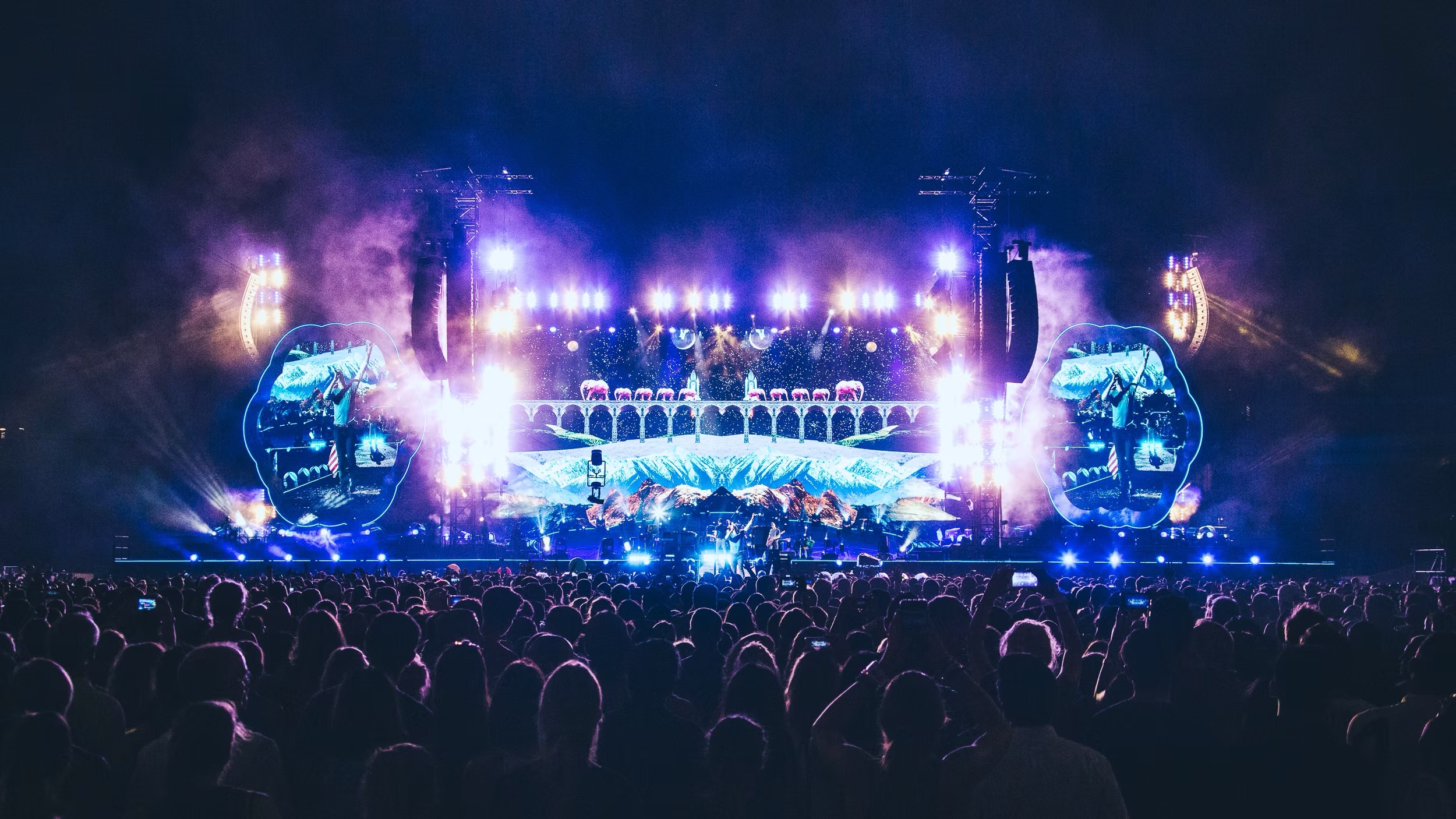
It was an interview unlike any we had ever done. His written answers to our questions were short, often ending in ellipses… as if more were to come. And more did indeed follow, not with additional words, but in the form of the rich insights his succinct responses provoked in our mind. Such is the fertile alchemy of ideas that works inside the creative soul of Paul Normandale.
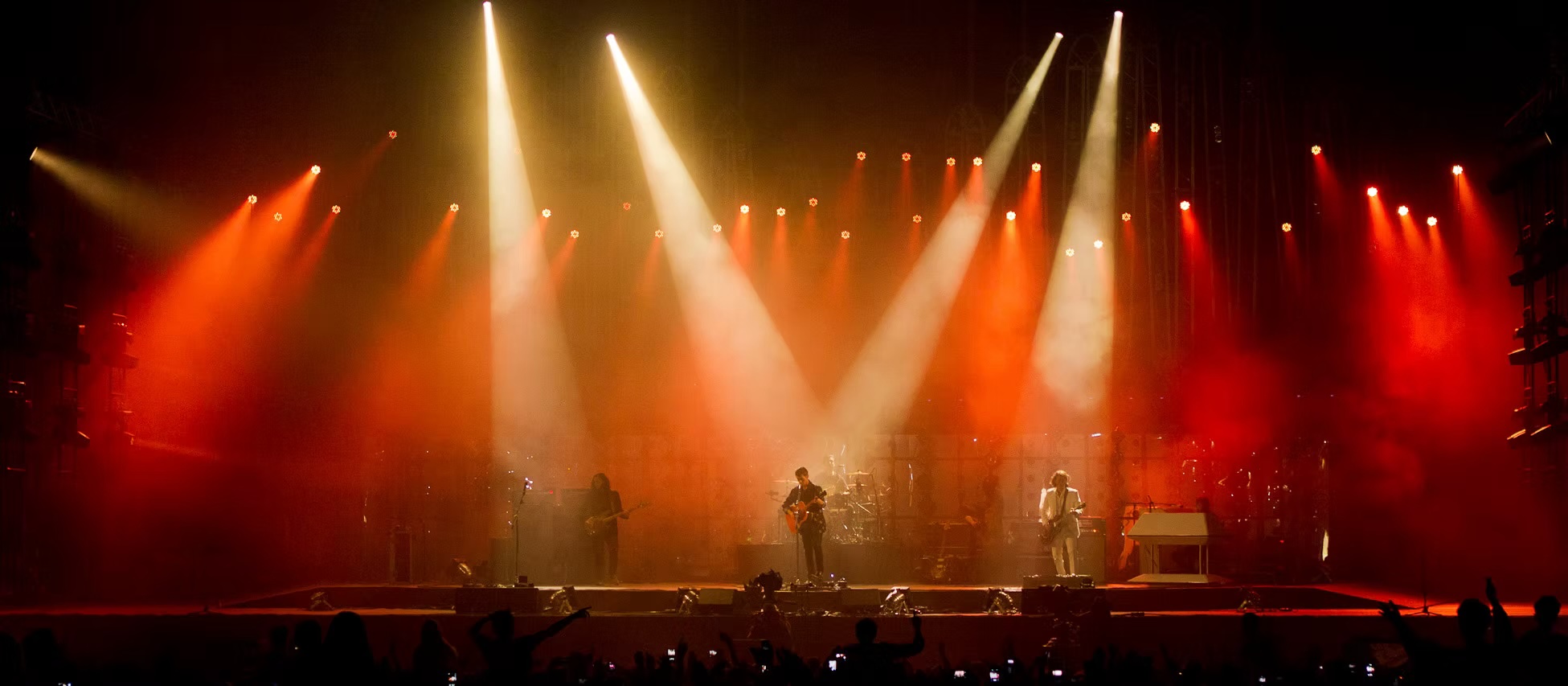
Writing about the English designer as a friend and collaborator in 2011, the late Nook Schoenfeld noted, “designing outside the box is the only way Paul designs.” How else to explain a design that amassed a giant collection of old, battered fixtures for a Kings of Leon show and cobbled them together in flying carts? It looked, wrote Schoenfeld, “Like a giant pile randomly stacked from floor to ceiling.” But it worked!
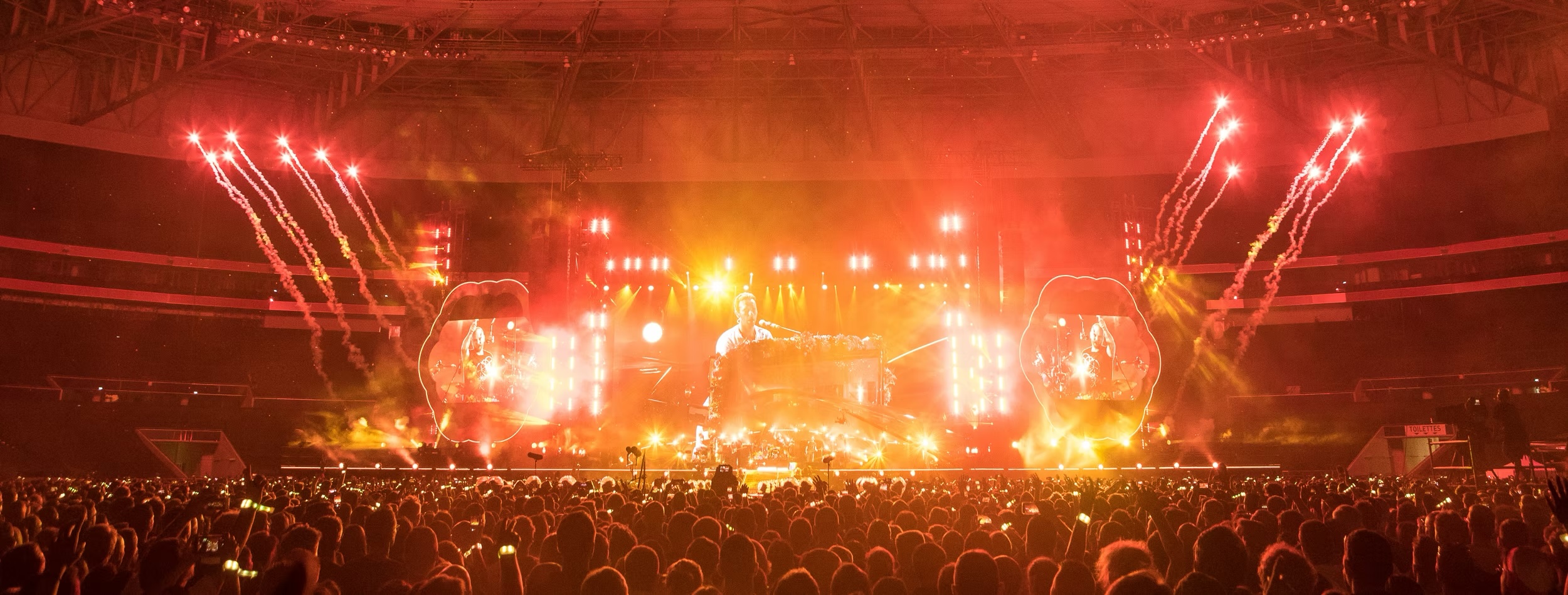
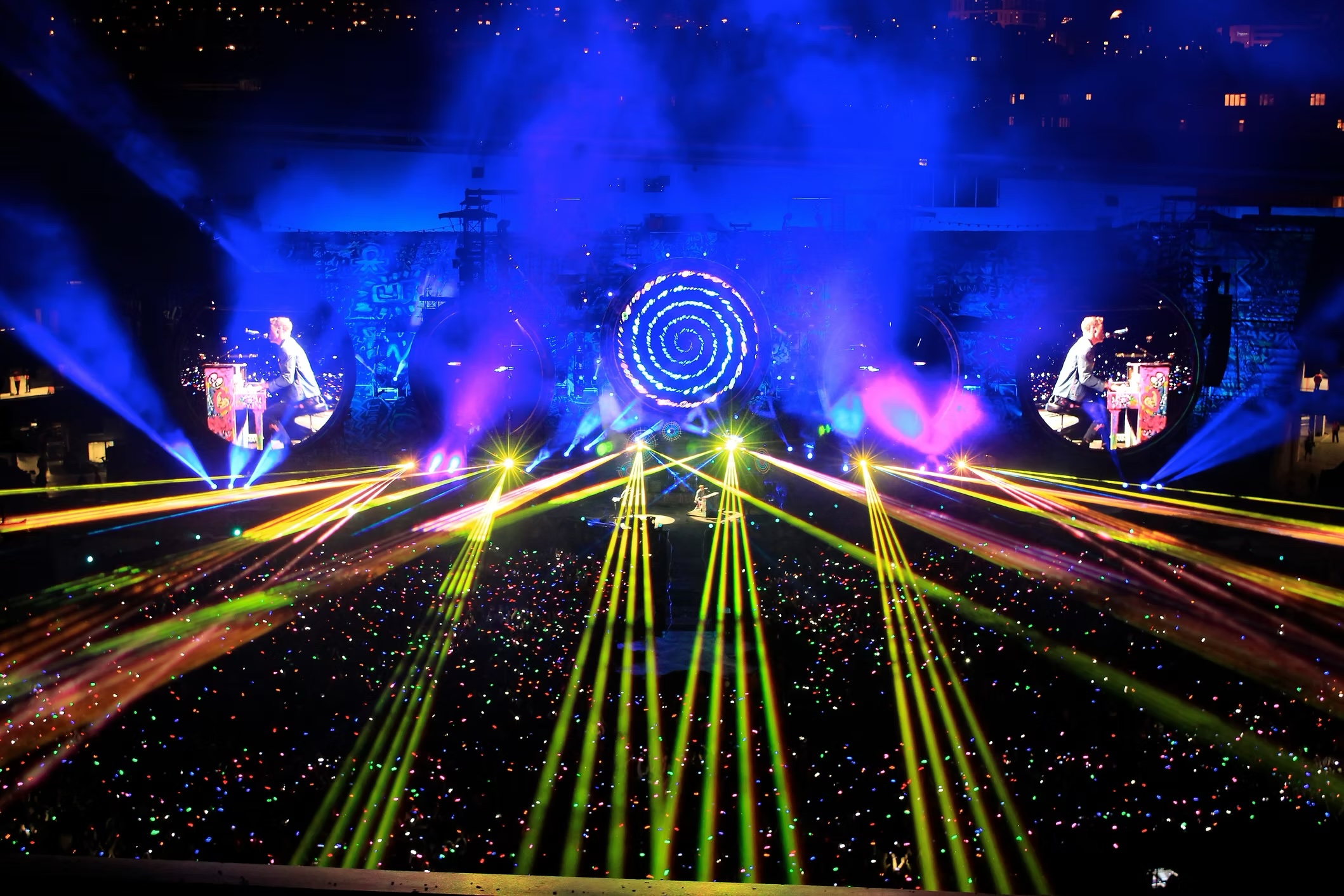
Modest, unassuming, and quick to give credit to colleagues and collaborators, Normandale is ferociously daring when it comes to trying new ideas. Never wading into the same creative pool twice when seeking inspiration, he isn’t afraid to reinvent any wheel of lighting design. This has led to some stunning accomplishments, such as the legendary projection spheres he created for Coldplay’s Viva la Vida tour, an innovation that has influenced countless designs since.
The list of tours and artists that Normandale has designed for is long and legendary – Fleetwood Mac, Beastie Boys, Oasis, to name a few. He talks about some of them in this interview. Be advised, though, his answers are not very long, but as you read them, you’ll find they are rich in lighting insights.
Our friend Nook Schoenfeld wrote that the “forays into unbridled turf” in your lighting designs led to work that he described as legendary. How would you describe the role that risk-taking plays in your design process?
“I never really perceived it as a ‘risk.’ The process is very much one of determining what my clients require. This may or may not be as they articulate, but at any rate, the design manifests accordingly …”
When we helped Nook edit his book “Old Man’s Musings,” he talked about how you challenged him creatively in the 1998 Beastie Boys tour when he was your programmer. What are your recollections of that tour?
“Nook was the legend in truth. The tour was of arenas – the round on a contra rotating circular stage. The band played their songs as punk, rap, or jazz … often never the same way twice, so we needed a plan that would be flexible. That was very much not what Nook signed up for….or was used to. But we both remembered the project with great affection and mentioned that whenever we met for many years after.”
Your company’s name, “Lite Alternative,” fits your philosophy very well. Can you tell us how it came about and what it means?
“A design should be more than just an equipment hire. It’s all about being a creative avenue and a design first principle ….”
Your designs are, no doubt, inventive and very original. So, how do you get inspired at the start of a project? Long walks? Listen to music? What gets your juices flowing?
“It’s never a conscious process. Instead, it’s more the subconscious collection of ideas and influences that emerge and evolve.”
Once you start a lighting design, what are the first things you look at?
“The broad, big picture….a scribble. This is, by far, the best part of the process.”
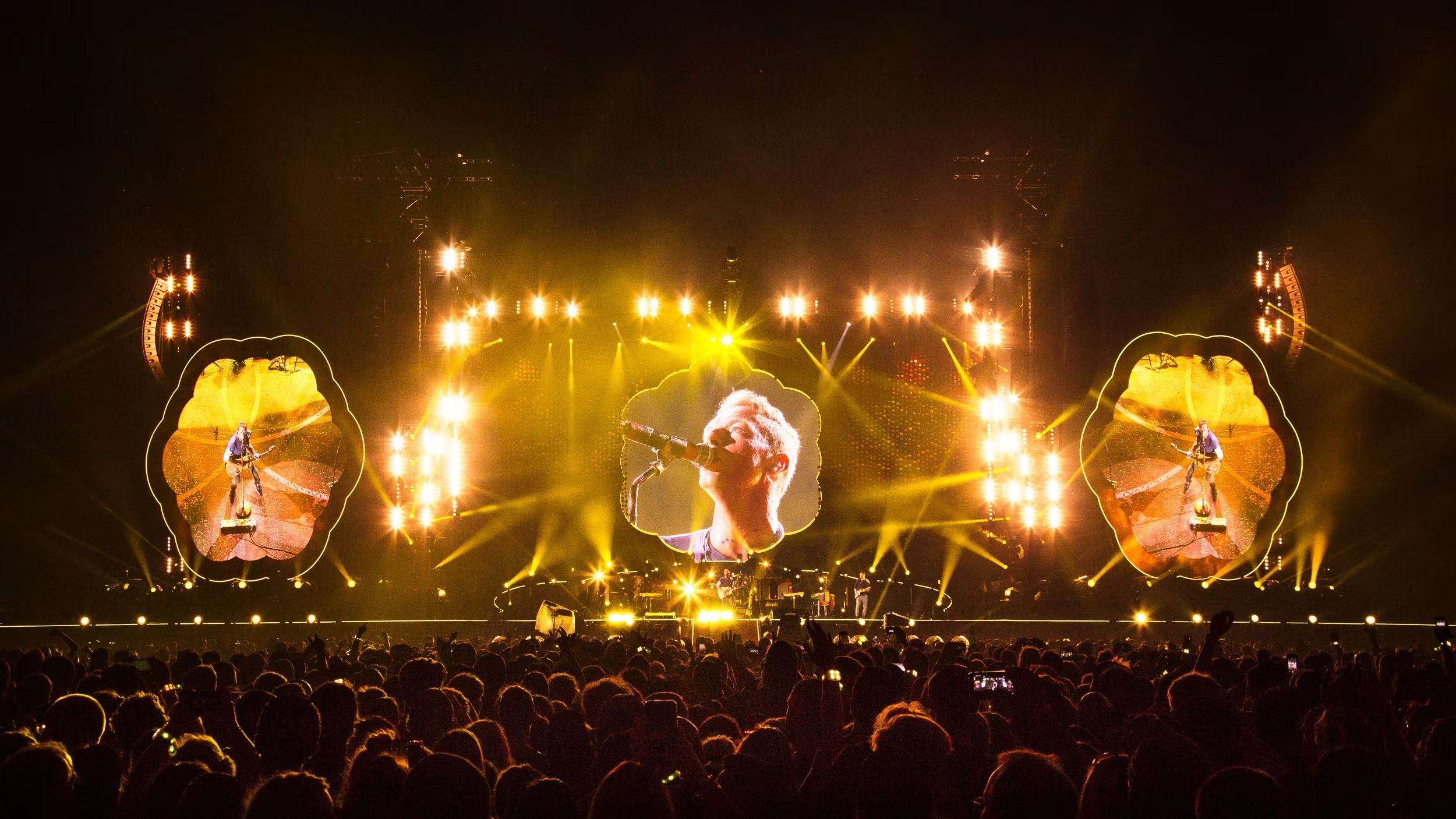
Taking risks gives your designs energy, but you always come back to putting your client’s vision first. How do you keep from going too far out vis-à-vis your client’s concept for a tour?
“Maybe I have at times done that, but my clients have been too polite to mention.”
You’ve lit a wide range of clients over the years, Coldplay and Fleetwood Mac to the aforementioned Beastie Boys. So, do you have to like a client’s music to do a good job lighting it?
“I have to see the lights in my head as I play the music…”
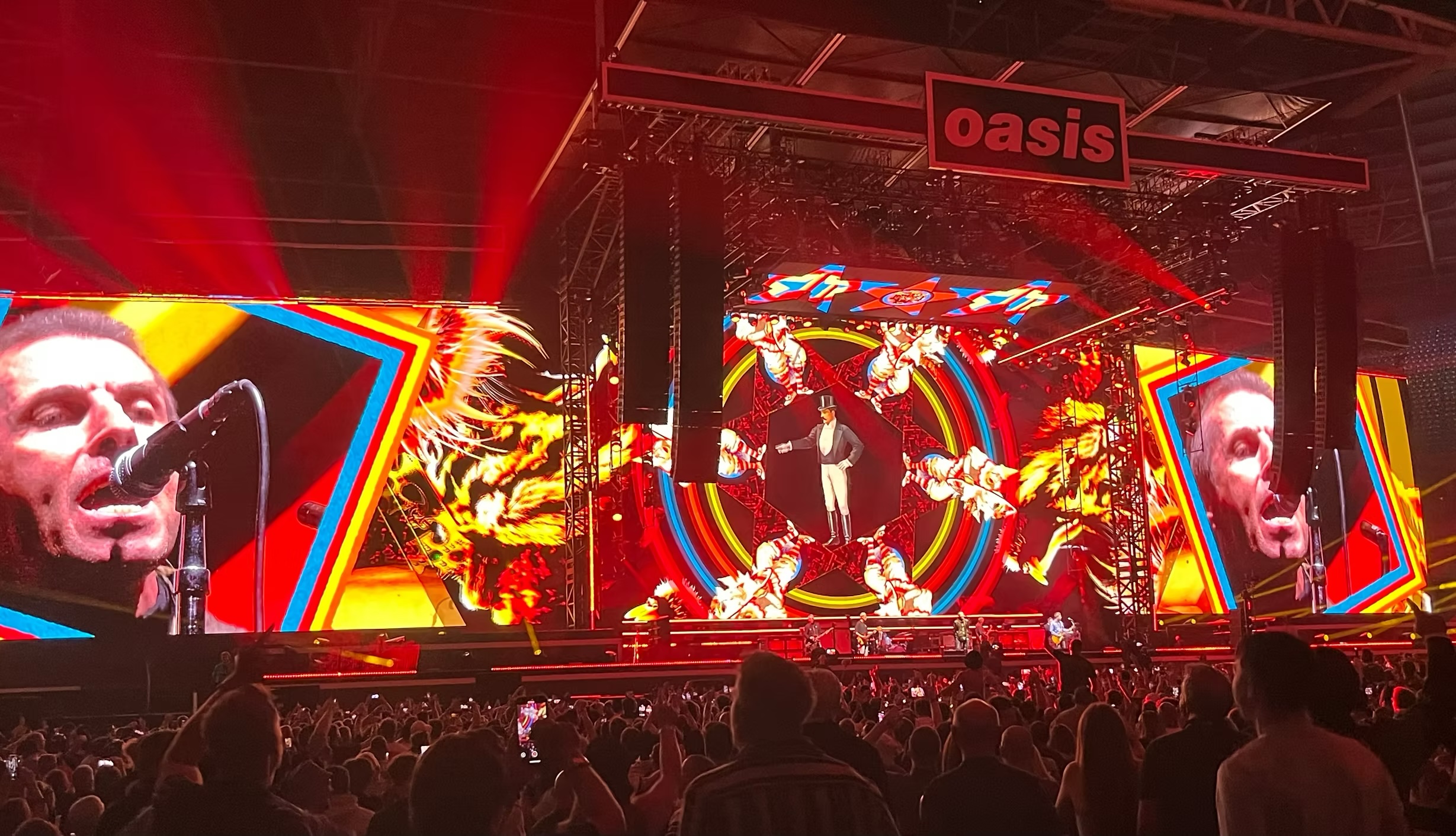
You often have strong geometric elements in your design, such as in the recent Oasis tour. Why is that? What do geometric patterns add to a design?
“The thread or start point of the recent oasis tour was based on their logo, clearly defined geometric simple lines…”
Speaking of geometry, the projection spheres you used on Coldplay’s Viva La Vida tour were legendary. Can you tell us a bit about how that came about and how you did it?
“It was the result of pure chance. I saw a small inverted projection sphere in a building used to track ships across the globe. After that, it was all about scale and how to achieve the spheres to break the mold of what was expected and the norm in video/IMAG presentation.”
You designed four Coldplay tours. After seeing one of them, Fleetwood Mac’s Mick Fleetwood invited you to design the band’s On With The Show tour. Did that come as a surprise? How did you prepare for that?
“It’s always a surprise when someone calls. I suspect everyone else was busy at the time.”
We doubt that! That’s why you are asked to design again and again for so many bands. So, when you design for a band multiple times, how do you guard against repeating yourself?
“The very best bands have music that promotes many images, as the themes shift over the course of their tours. It’s the designer’s role to reflect this evolution.”
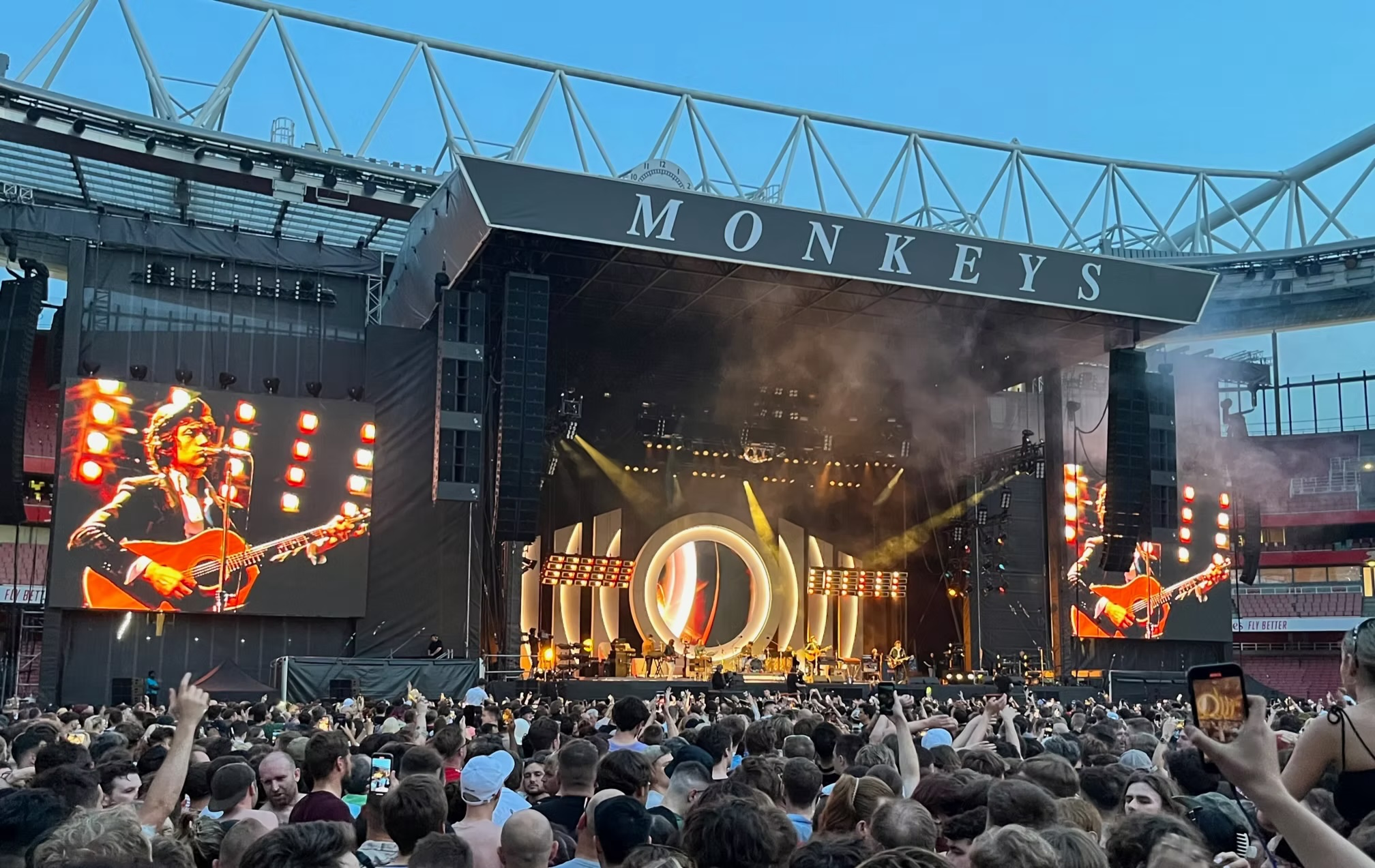
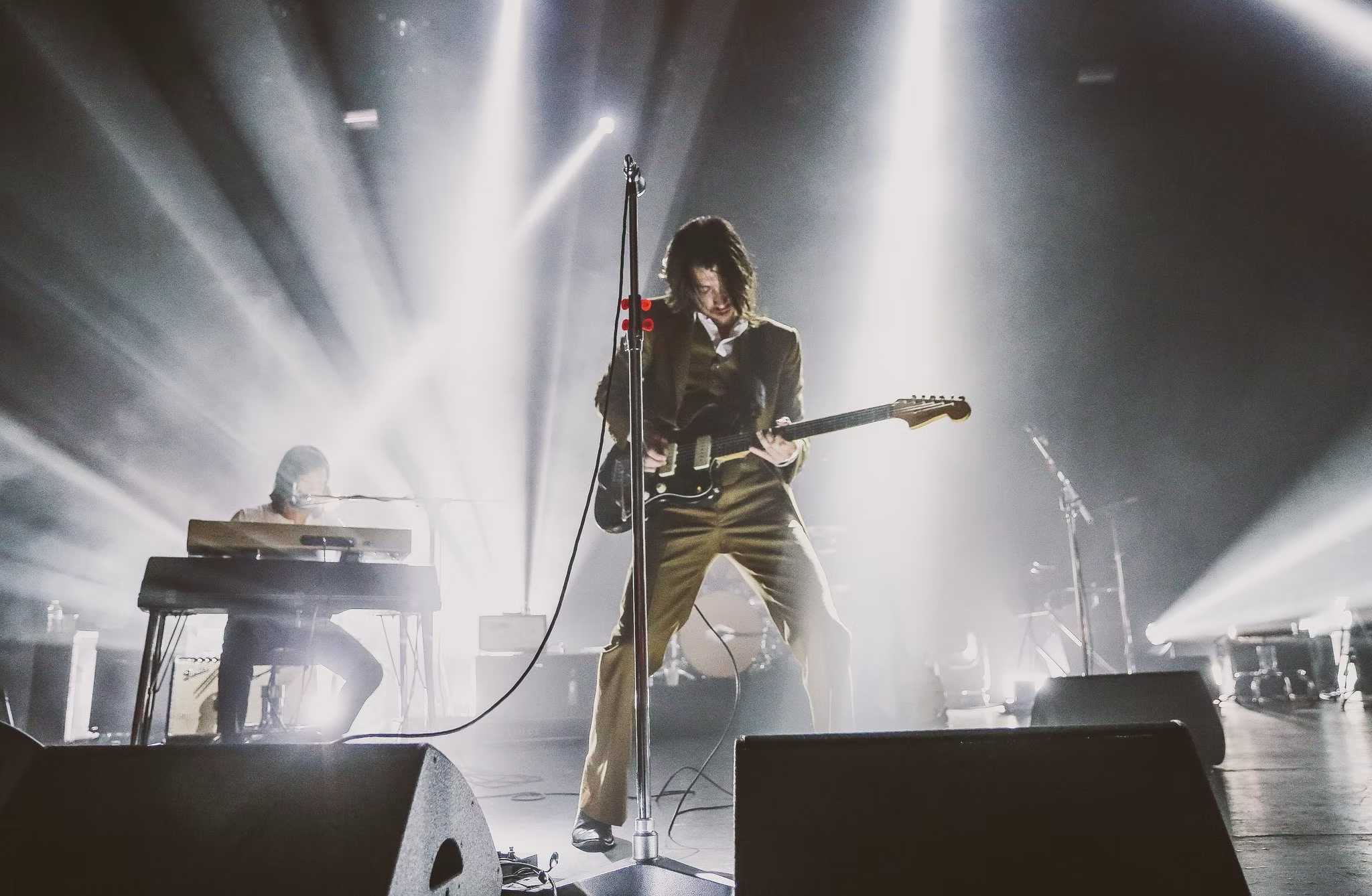
You do quite a bit of pixel mapping. We really liked how you pixel-mapped the headlights for Arctic Monkeys on the Glastonbury Pyramid Stage. Any advice on using, but not over-using pixel mapping?
“It’s a tool like many others. The precision required for the headlamps in that show meant that mapping was the best course. It’s always the result, not the process. So, it’s a high-tech solution to a very organic look.”
Your design for James Blunt’s Back To Bedlam tour is majestic. Can you tell us what your vision was there?
“Simple and effective perhaps – the goal as always is to enhance, not overshadow, the artist on stage.”
Video figures prominently in many of your designs. What makes the marriage between video and light successful? Where do you see that marriage heading in the next five years?
“I see video as a wonderful light source — always have!”
How do you think AI will change lighting design over the next five years?
“Perhaps we will all be seeking second careers…I will give it some thought.”
How did you become a lighting designer? Why did this career choice click for you?
“Luck and lack of judgement …”
If you didn’t become a lighting designer, what do you think you would have done?
“Not a sound engineer!”
What is the one thing you want people to know about you as a lighting designer?
“I am no salesman…judge me by my work…”