Frédéric (Aldo) Fayard – Lighting Large
Posted on December 2, 2025
Think less like an ant and more like an elephant! This Paris-based lighting designer shares this advice with anyone taking on a massive project, something he has done with consummate skill throughout his award-winning 30-year career.
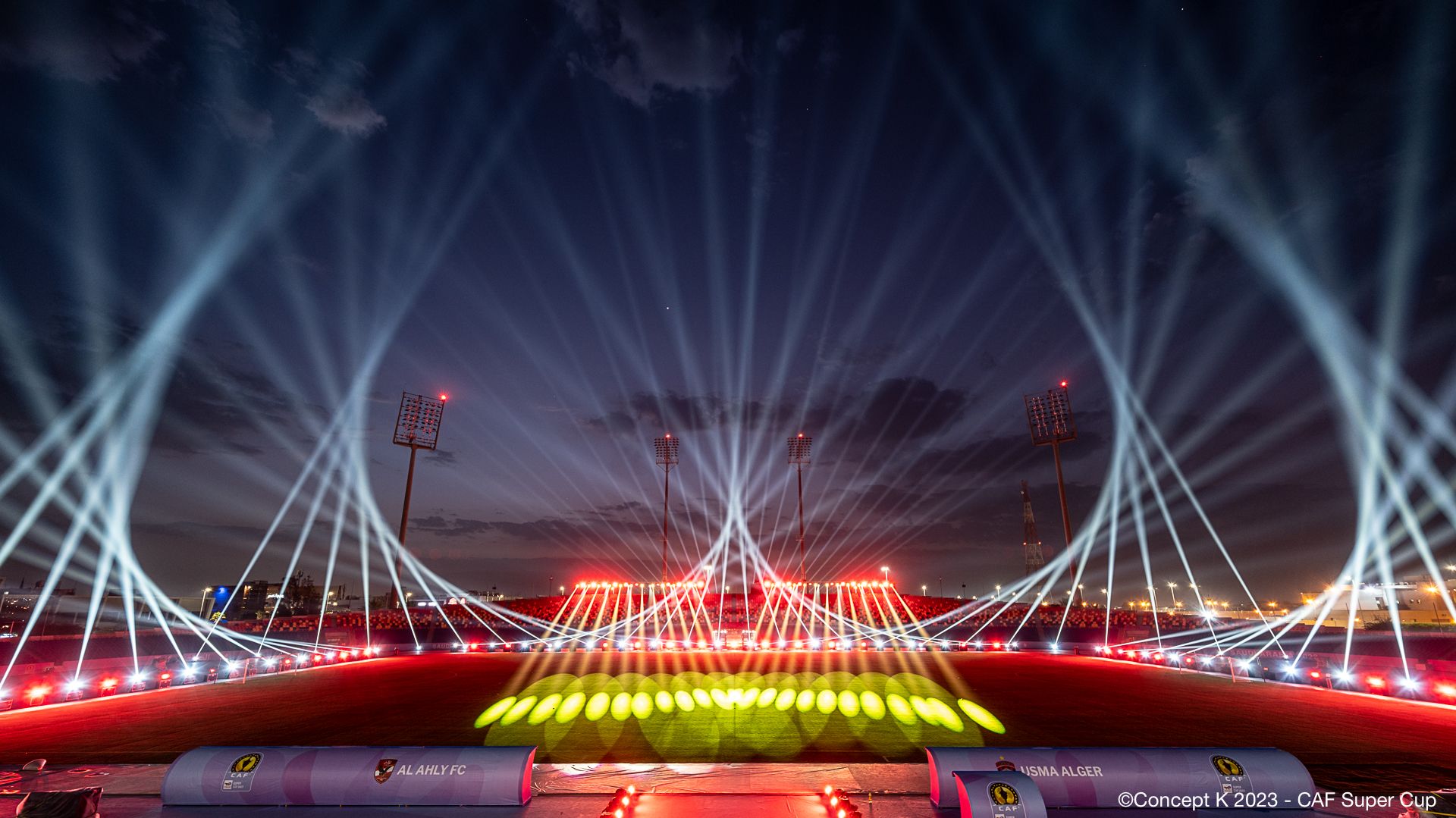
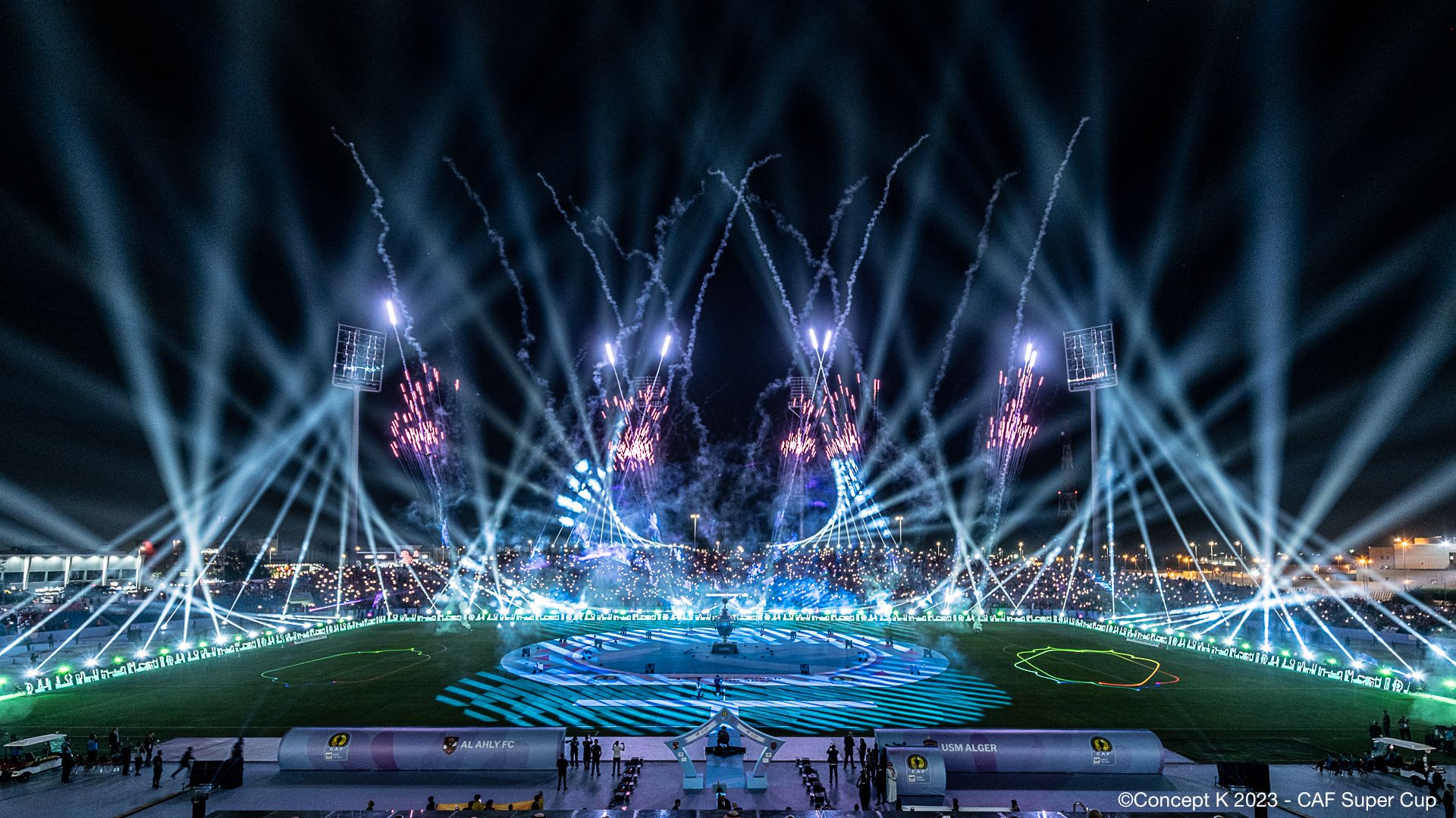
Boldly embracing every challenge, be it at the Accor Arena in Paris, The King Fahd Stadium in Saudi Arabia, or anywhere else across the globe, Frédéric (Aldo) Fayard will unapologetically immerse even the largest venues in vivid monochromatic color schemes, fill the sky with intense aerial effects, or do anything else it takes to convey “a feeling understandable by everyone at the same time,” regardless of where they happen to be seated.
Fayard’s grand vision shines brightly at the widely acclaimed New Year’s Eve Dubai Burj Khalifa Light and Laser Show (produced by ECA2), in which he and his talented team at his company Concept K, immerse the world’s tallest building, and much of the downtown district, in a brilliant panorama.
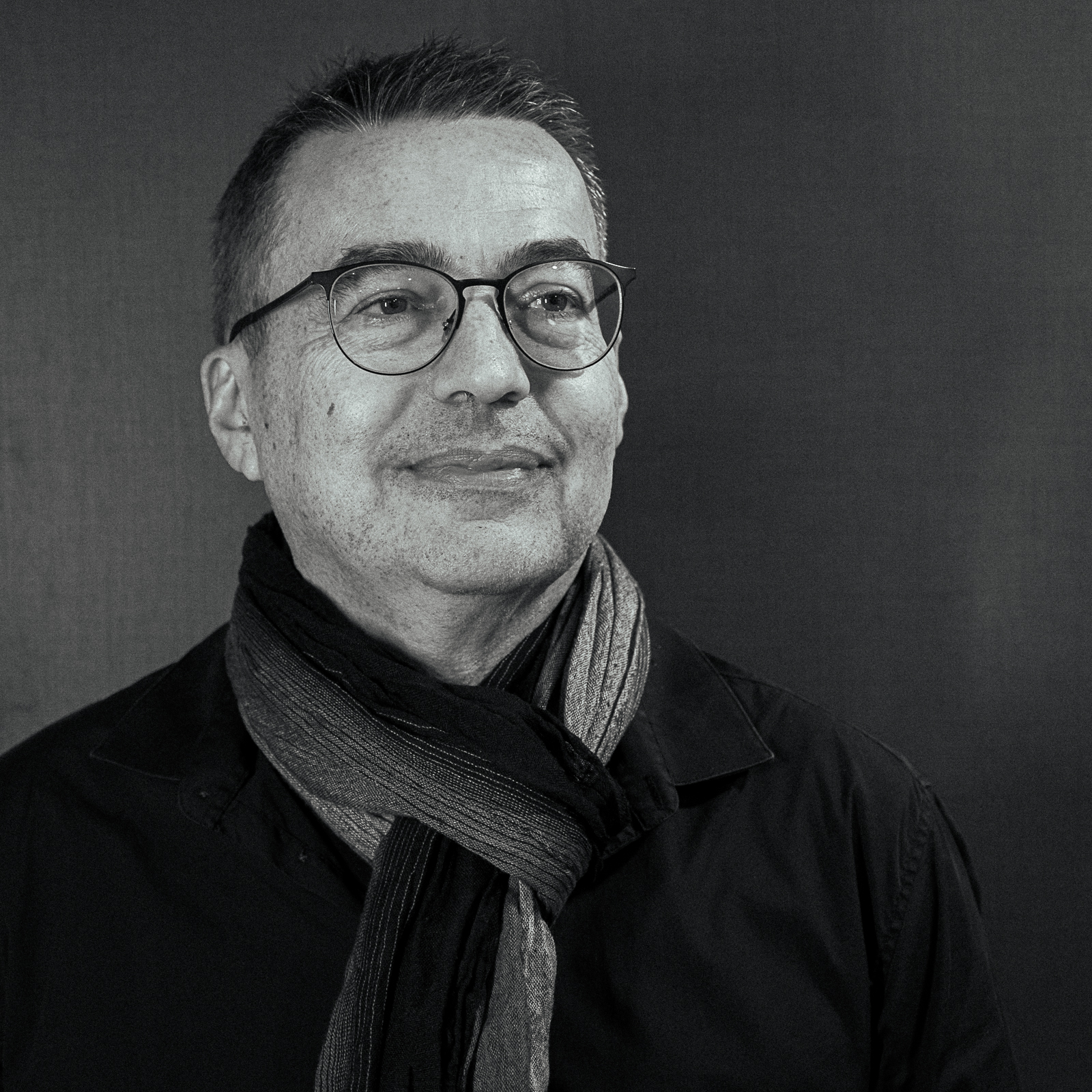
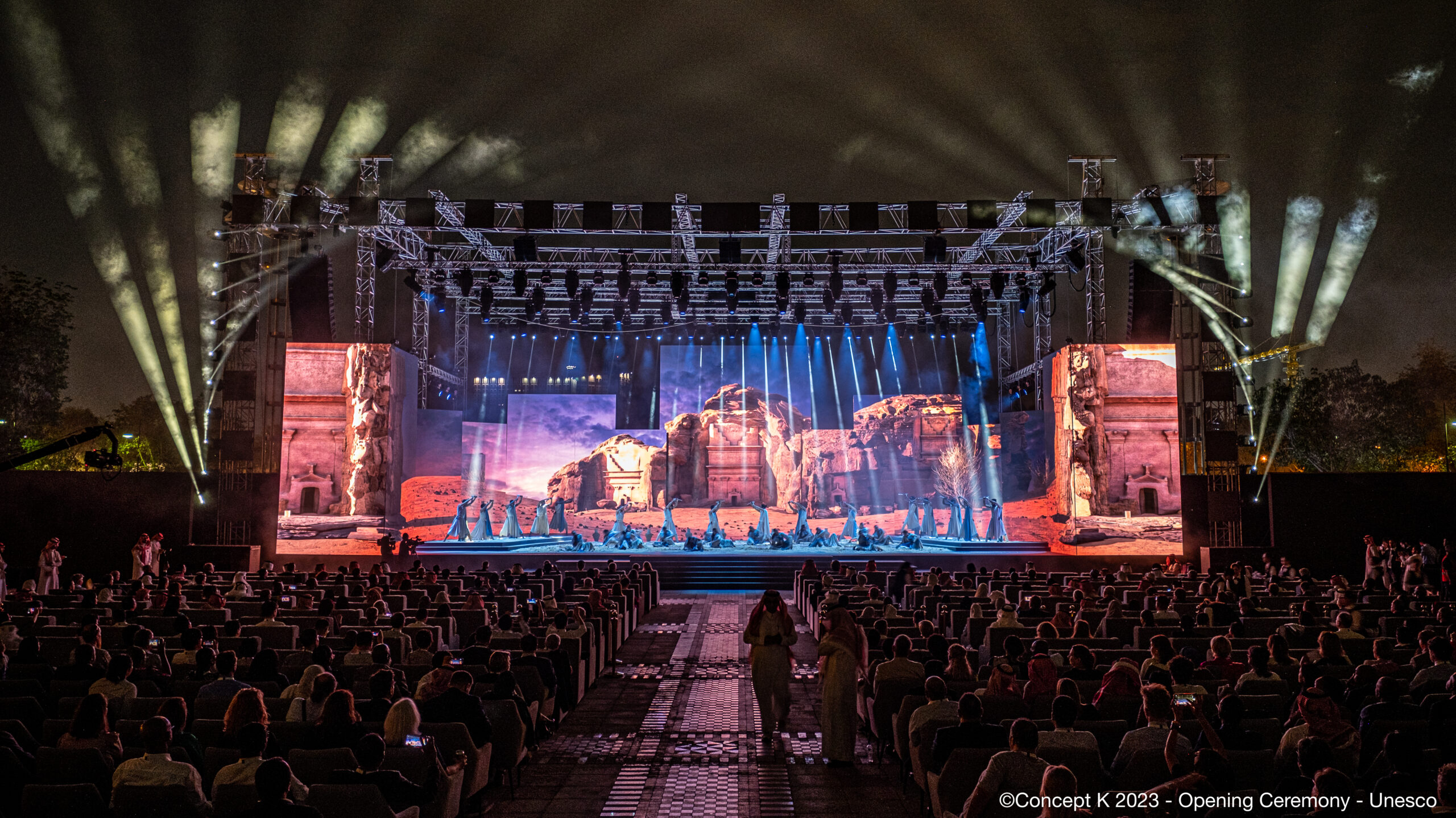
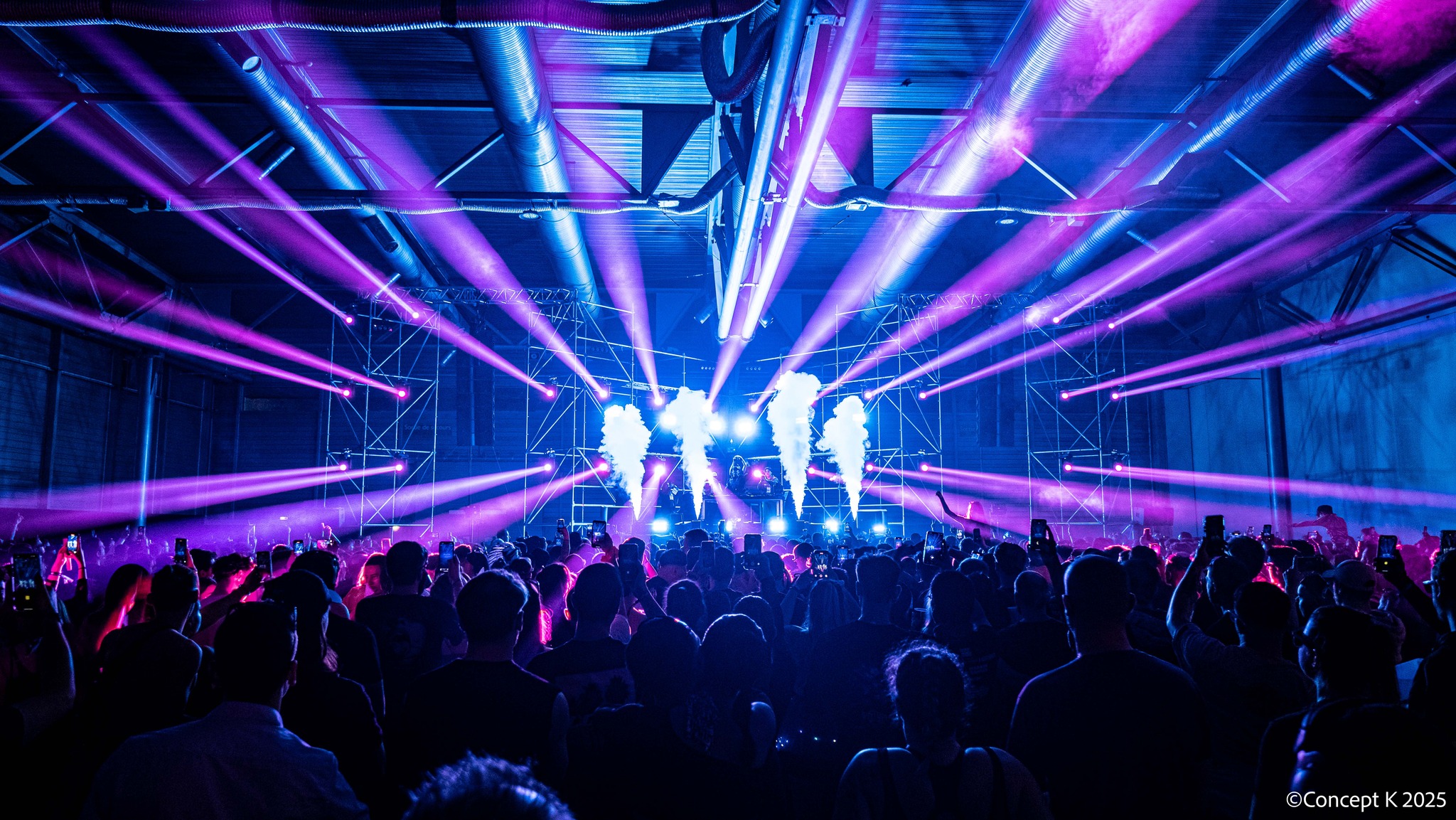
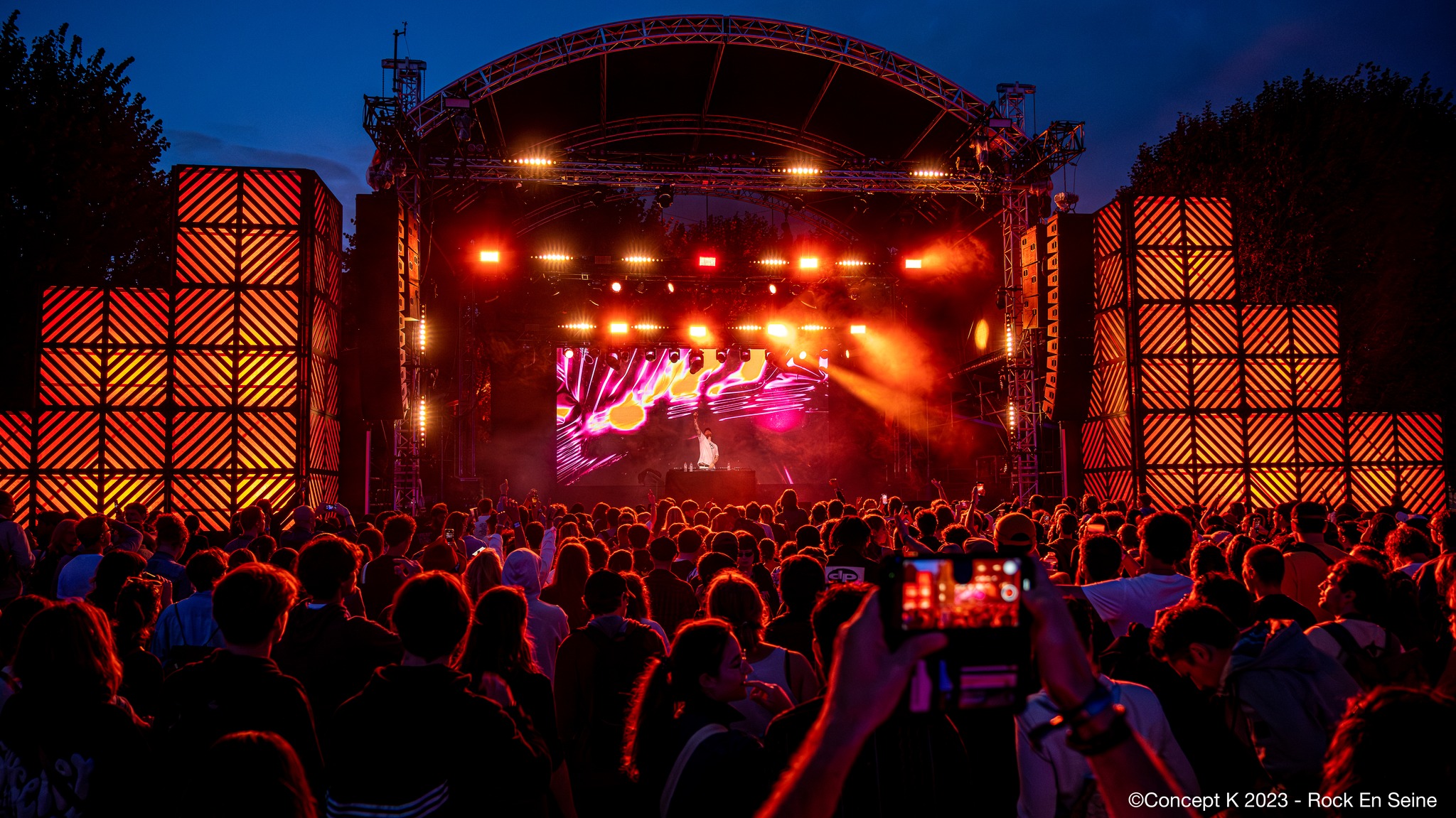
The Dubai celebration is one of many world class events that have been transformed by an inspired Concept K design, as Fayard and his team have springled their magic at Expo 2025 in Osaka, the Opening Ceremony UNESCO in Saudi Arabia, The Nigeria Centenary Celebration at Abuja Stadium, the 64 Pre Match Ceremonies for the world cup of Football in Qatar, the Red Bull League of Its Own in Paris, and World Skills Closing Ceremony in Lyon. Their impressive portfolio extends beyond events to include tours, trade shows, festivals ( such as all the stages at Solidays), and broadcast/film projects, like “Lucy” with Scarlett Johansson and Morgan Freeman.
There is, of course, much more than boldness behind Fayard’s captivating designs. Digging deep into the essence of every color, he uses his distinctive palettes as an emotional bridge between a lighting design and the audience that it touches, mindful that every person sees every color in a unique and distinctive way.
Fayard’s journey in lighting design began when he worked as a DJ at 16. Later, he designed for a moppet theater, where he did a show for children under three years of age. It was then that he experienced the connection between light and emotions in its purest form. He remembers that lesson to this day, and the recollection endows his designs with a joyful air of discovery — something that makes them warm and welcoming, regardless of how big the elephant gets.
You have such a wide and impressive body of work, but we have to begin by asking you how you got the nickname “Aldo?”
“Ahaa !!! Well, that’s a very long story, and one I usually only tell late at night after a long programming session with my guys… preferably with a good old rum or whiskey in hand.
I’ve already done that, and there are hundreds of sides to the story to explain it ;)”
Back to your stunning portfolio, you and your team have created impressive designs in every corner of the world. Are there regional differences in lighting design? Do clients in different parts of the world want or expect different things from you?
“Definitely! China doesn’t have the same expectations as Saudi Arabia or Australia. Even within Europe, the cultural approach is different between the UK, France, Italy, and Hungary. I remember the first time I worked in China, back in 2011. The client’s feedback felt unusual to me, and it took some time to adapt and really understand what they liked and where their sensitivities were. Fortunately, some of the Chinese production team members spoke English, and I spent time talking with them and using WeChat (their local social network) to see the kind of visual content they shared. That helped me a lot.
“In the end, it’s all about listening to the local people and taking the time to understand their expectations – it’s a bit like a new language. Travelling increases your understanding of your own personality. People are shaped by their personal background but also by the history of their nations. Some may be more sensitive to warm or cool colors, others to dynamism or architectural approach, etc. Luckily, we’re all different, and that’s why it’s very rewarding to travel and meet people from different countries and cultures.”
Your work is also very diverse in terms of the types of projects, from large-scale events and stadium sporting contests, to broadcasts and concert tours, as well as trade and fashion shows. Is there any cross-pollination between these genres? Can you take lessons learned from one and apply them to others? Or is each one a separate entity?
“Of course, there are many gateways between the different projects. Cinema has its own world, TV has another, and touring has several — whether it’s small French tours, European or worldwide ones. Global stadium shows follow their own rules as well, just like large-scale productions such as the Burj Khalifa show or Formula 1 events, which require very specific handling. Permanent installations, theatre, luxury events — each has its own rules, codes, and tricks.
“But once you understand all these rules, the limitations and the possibilities of each, it becomes easier to process between them. The real pleasure is when you can take something you learned in theatre and apply it to an architectural project or when you adapt a tool from the music industry to cinema.
“By the way, the lines between these genres are blurring more and more. Technology, gear, crews, and knowledge are increasingly interconnected.”
Of all the project types we just mentioned, broadcast seems to be the most challenging for designers who have worked in live events. What are the big challenges live event designers have to deal with when trying their hand at lighting a broadcast?
“I think the issue is even more important than what you say. Today, 100 percent of events need to be conceived with filming in mind. The first reason is because of smartphones and social media. Whether it is the live experience or the broadcast, both come after smartphone content! We are hostages to our smartphones. And behind this topic are marketing departments and their targets.
“The reality today is that we are judged by public opinion through phone videos filmed by inexperienced people, and immediately shown to clients. It’s unfortunate, but it’s the truth! As a result, we must cover every direction, every background – which makes productions more expensive and often compromises the dramaturgy of the show. And that’s the case for most events now.
“As you said, the broadcast production is another very important topic because they are not handled the way they should be. It is mainly due to the director coming too late in the process. He usually doesn’t know the storyboard and the show in depth. He relies on notes from the script made a few days before and ends up doing what he thinks is the best option – and not necessarily what the art director intends. Clients should understand that the director should serve the show and not the other way around. The show is not made for the director. Luckily, there are some exceptions. Eurovision is probably one of the best examples.”
We’ve always been impressed with your ability to incorporate a wide range of colors simultaneously into a design, the way you did, for example, at the Euro 2024 Logo Launch. Designers are sometimes afraid to mix more than two colors at a time. What is your advice on balancing multiple colors at once?
“I do agree with the idea of using a maximum of 2 colors…Hehe! In most cases, it works, but like any rule, there are exceptions, and sometimes the storyboard demands more, as was the case in Berlin.
“To feel the right emotions, our eyes need to see something easy, simple, and right aligned with what the story tells and what we’re seeing and hearing around us. Colors are a real personal experience; nobody sees them the same way. Just like the sound, smell, touch, and taste – our senses are really personal. That’s why you can be moved by something while another might feel nothing.
“Our job as lighting designers is to try to get this ‘right’ feeling. Sometimes, it’s hard to explain why we chose this or that color. Sometimes it’s just that you feel that it has to be this particular one. That’s why it’s very important as a lighting designer to immerse yourself in the story you’re trying to tell. You have to live it in order to create lighting that feels like the right one.”
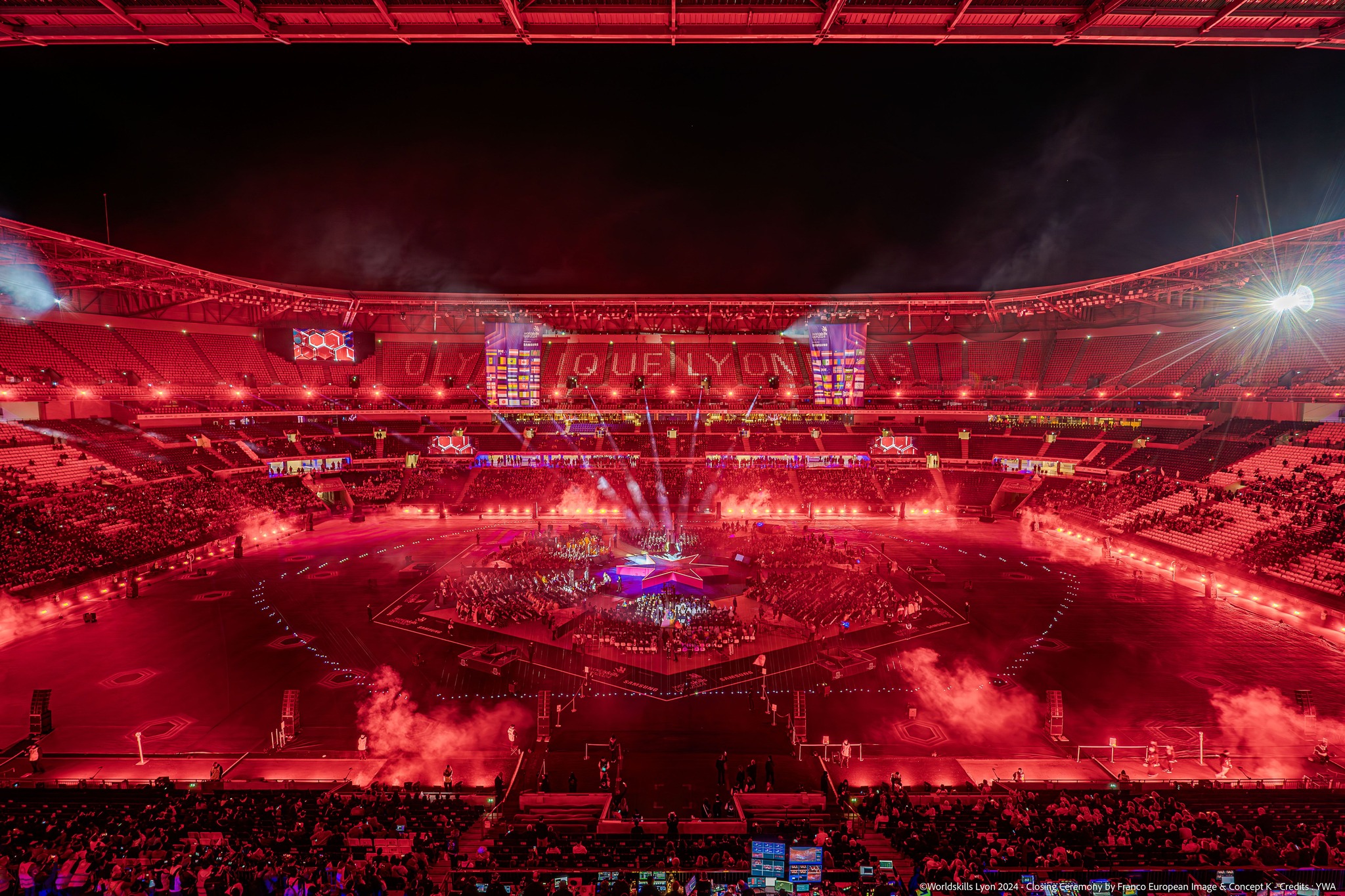
Conversely, it’s also impressive how you sometimes cover entire areas (or almost entire areas) of stadiums or outdoor events in monochromatic palettes the way you did at the 2024 World Skills Closing Ceremony. What do you feel monochromatic color schemes add to a design?
“When you are working in a massive space like a stadium, your approach has to also be massive. A stadium is already impressive by nature. The tens of thousands of people create a set design by themselves. The rumor of the crowd and the 360° situation reminds one of the old Roman Arenas, the gladiators fighting in the middle. So the use of simple but massive colors and effects must be in phase with the place.
“Time takes a different place. You have to think less like an ant and more like an elephant. The challenge is to convey a feeling understandable by everyone at the same time. For example, if your story evokes fear and you want to use red as a color to convey danger, you have to use every fixture you’ve got to flood the space with red everywhere. The audience must feel that the color red is implemented in their own brain. You need to surround them with the color for them to be immersed. You need to go big; there is no other way.”
Another thing you’ve often done is weave buildings or other structures into your design for outdoor events. What are the thing you look for in an edifice when determining how to light it?
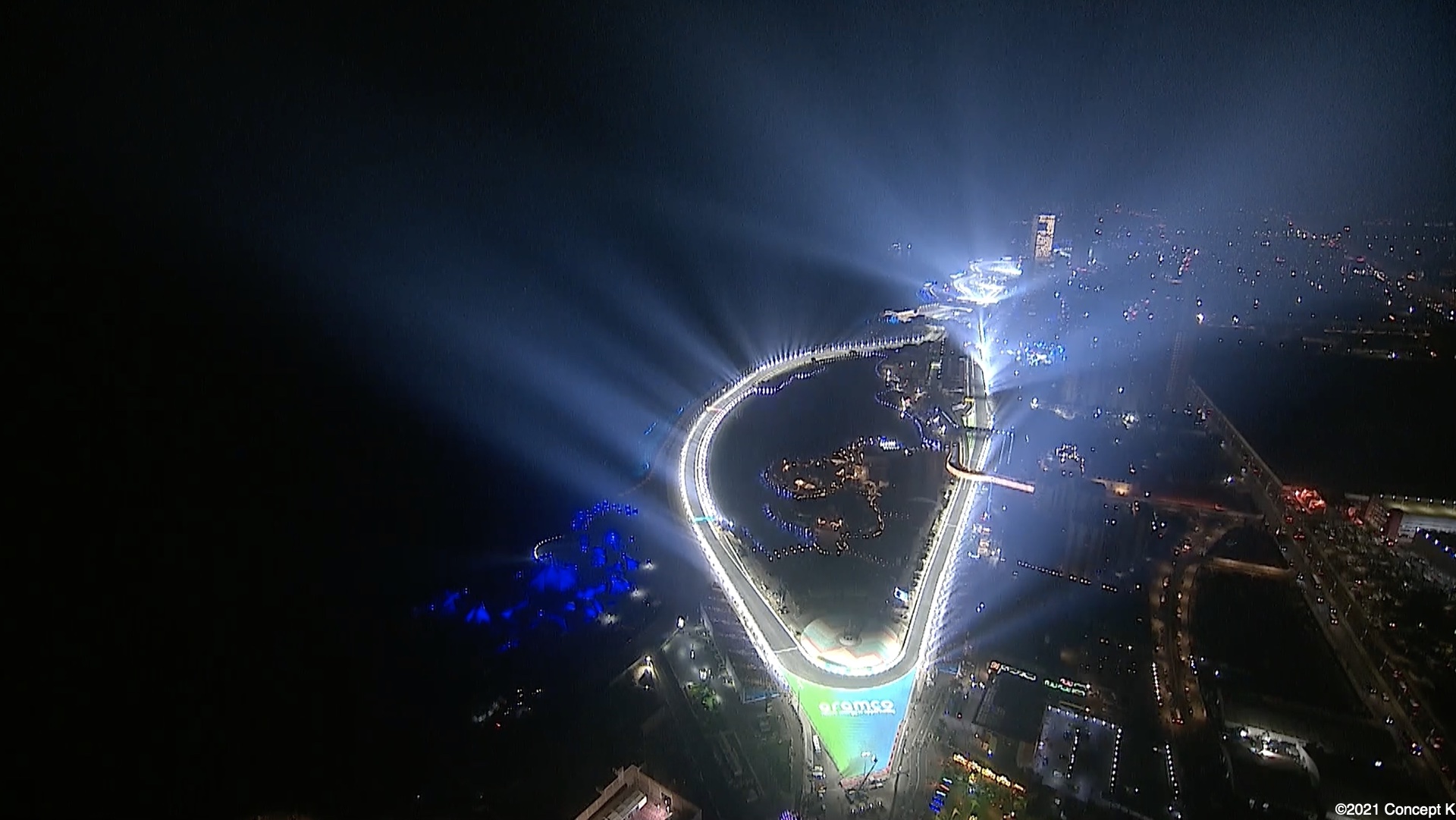
“There are different approaches. Sometimes, the event is on such a large scale that you integrate the surrounding buildings in the visual perimeter, which was the case for the opening ceremony of the Formula 1 in Jeddah. In this case, if they are small and not really interesting, you can ignore them, but if they are too massive, it’s better to embrace them and integrate them into the lighting design.

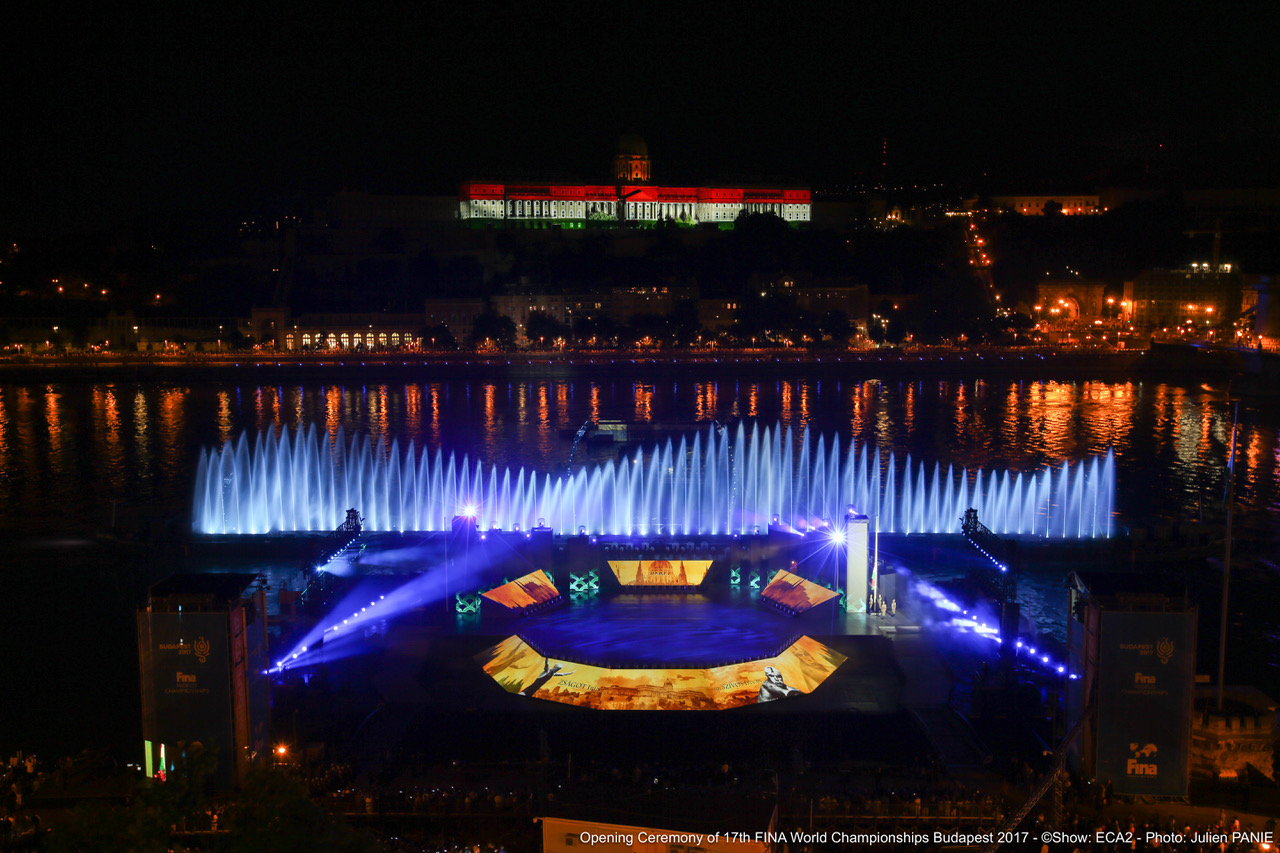
“In other cases, sometimes, a building can be used as a character. For example, it can serve as the voice of God to embody something or somebody. It can help people to identify a narrator thanks to the building coming alive. It then becomes a part of the show. Or even lighting a building or just a part of it as a subtle reference can also be interesting to go further than expected, and it creates a surprise effect. It’s a way of enlarging the set design, like we did in Budapest when we lit the top of a church located 2 kilometers away behind the stage.
How do you determine when to use projections vs. LED video tiles?
“In most cases, these decisions are made for the wrong reasons. Usually, it’s for budget purposes, because clients believe LED screens are “better” than video projection, due to AV companies pushing one option to earn more money. But the reality is such there are technical and artistic reasons to consider. The shape, size, resolution, and brightness are all important technical factors that can determine the best choice.
“From an artistic point of view, we focus more on the best technical balance and how well the video content integrates into the story. LED screens are emissive, while video projection is not. This creates something really different in terms of sensations. The light produced by an LED screen can be used creatively, or can be something to play with or even can become a problem.
“Combinations are also possible. That was the case on the Indochine show we did at the Stade de France in 2014. You can play with the transparency of the LED screens, or use a net fabric with projection to create illusions, hologram-like designs, or even use the beam of the video projection to display organic effects toward the audience, as we did with my friend Laurent Chapot on Etienne Daho’s French tour in 2001. So yes, you understand that this is a real topic with many options and reasons to consider. But the most important point is that the lighting designer must be involved in those decisions. Because he is the only one to know and understand all the consequences and how to manage the balance properly, the energy and the consistency to find the best compromise.”
How and why did you become a lighting/production designer?
“In my case, it started really early. When I was young, I was a DJ working with three friends. From the beginning, we loved syncing the lights to the music to create a new dimension. We used lighting to enhance the style of music we were playing. At that time, there were no cues, no landmarks, and everything was manual. We were pressing buttons all night long, one after the other!
“I learned rhythm, energy, and balance, and 40 years later, those are still my main core values. When I started playing with lights, I immediately loved it. But it was at the end of the ’80s that I discovered moving lights, and that changed my life. I completely fell in love with these kind of lights. For me, it was fantastic; they pushed the limits. I was lucky enough to have access to those fixtures very early on, and I spent days, weeks, and months working, practicing, and improving. Those lights could speak for me. I could express what I was thinking through them.
“For my first national tour in 1994, I worked with professional Ice Skaters (Isabelle and Paul Duchesnay) and Izzy used to warm up each time to her own music. One day, I had the idea to program a light show to go with it, just for fun. And the day before the show, I thought, ‘Why not show it to her?’ When she saw it, she burst into tears and asked the production to include that two-minute lighting show as the intro to the second part of the show. A piece of my mind became part of the show. That was really outstanding. I never decided to become a Lighting Designer, I just became one, because it was the only thing I truly wanted to do.”
Along those lines, can you recall any other projects that most influenced your development as a designer?
“It’s not so much specific projects, but rather different periods that shaped my knowledge and career path. So far, my career has had several lives:
“First – As a DJ and “LJ” (it was called like that back then). As I told you, I learned rhythm, energy, and balance.
“Secondly – as a Local Lighting Technician, I learned the technical side of things and understood how important it is to understand the global overview.
“Thirdly – As a National-Level Operator, I understood how essential teamwork is — you’re nothing without your team. And at the same time, I also understood that to be efficient, I needed to know my job perfectly. That pushed me to master my craft.

“The fourth thing, as a Touring Lighting Designer, I spent a lot of time listening to the requests of managers, agents, producers, but above all, the artists – sometimes, they pushed me past my limits. I learned how to listen, to understand different points of view, and the sensibilities of each individual. I learned that a show can be a language. This was especially true with Shaka Ponk and their iconic singer, Frah. We spent hours exchanging our opinions and ideas to understand what he wanted. I owe him a lot.
“The fifth thing, as an international DoP, I understood how important it is to understand the culture of the country you’re working in. Perception isn’t the same everywhere in the world. I also learned how much local people can teach you — it’s essential to stay as close as possible to them. It taught me humility and strengthened my empathy.
“The sixth as a CEO, I do my best to find young, passionate people to bring into the industry, to hire them, train them, and share my experience and knowledge with them. And at the same time, I need them too to keep me connected to new cultures and trends.
“And finally, as a small company in an industry that’s growing bigger and more finance-driven, I’ve learned the importance of politics, partnerships, added value, niche expertise, networking, and the power of a team. The quality of your work is no longer enough. You need to be strategic, irreplaceable, and able to convince clients you’re the right choice. This was the case in 2022, with Lab2580 and Grand Final, two other small companies we teamed up with to compete for the Pre-Match Ceremonies of the FIFA World Cup in Qatar. Our union made our strength. Despite being up against companies hundreds of times bigger than us, we were selected to produce and deliver 64 shows across 8 stadiums for the FIFA World Cup.”
Along those lines — given the scope of your projects, you have to manage collaborations with a great many very creative people. What advice do you have on creating a successful collaborative environment?
“Building a team is probably one of the biggest challenges, and it’s relatively new. Because a few years ago, one person could manage both the lighting design and the full show. Today, with the rise and omnipresence of technology, you need a wide range of skills: technical and artistic. Network, IT, design, drawing, 3D simulation, video content management, musical sensitivity, programming across different software for lights, SFX, lasers… and maybe the most complicated of all: coordinating all those people and all those skills.
“That’s been my job for many years now, and it took a lot of time to get there because you have to understand the basics of each skill and each person. And everything keeps changing constantly. Each project demands its own workflow, depending on the client’s expectations. The pre-production phase has become strategic and sometimes even too important. Because now that we are able to make in high-quality renders, clients often expect to see the final result in 3D. But that’s misleading.
“When we did the closing ceremony of WorldSkills 2024 at Groupama Stadium, teamwork was key to achieving the best outcome. Due to tight timing, we had to split responsibilities and tasks to work on multiple aspects simultaneously. It was crucial to divide the mission smartly, allowing each creative department to work independently without disturbing the others.
“So, to answer your question, if I had to give a piece of advice, I would say:
Be patient, observant, a psychologist, humble, perseverant, thankful, empathetic, and very organized. You’re not a genius, but with a good team, you can build something much bigger than yourself.”
Something that stands out in all of your diverse projects is how you use different shapes and variations in shapes to add depth to your designs. How would you describe the role that geometric patterns play in your designs?
“Ok, when you talk about shapes, I guess you mean the volumetric shapes created by beams or by the design of the blinders.
“So yes, you’re right! We love shapes and consider them a big part of our design. Shapes come from the set design, the place, or the story. We try not to create “free” shapes. But like colors, shapes convey emotions. Very straight shapes express strength, while curved ones transmit softness and gentleness.
“They are there to enhance the story or sensations, and also to create depth and reinforce feelings. Additionally, we think about shapes dynamically and aesthetically. What I mean is transitions between positions give an organic feel, and that’s important to consider.
“A shape can also be revealed to highlight a feeling or to discover part of the set design. We program lights like painters create pictures — we need to support the story, and sometimes even tell it. In 2017, for the “Dream” project in Lebanon, our design was quite straight and harsh because the set design was restrictive. So, we created many curved shapes to add smoothness, especially during the gentler sequences.
Your designs have shaped so many famous, high-profile events. Is there one historical event from the past that you wish you could have been around to create a design for?
“Of course, there are plenty of shows I would have loved to be part of. Some artists like Lady Gaga, Daft Punk, or, years ago, Michael Jackson – it must be very interesting and exciting for a Lighting Designer to work with them because each of these artists has their own unique universe. Also, big events like Eurovision, probably the biggest show in the world for a LD, are very inspiring.
“The Champions League final show is another one — we actually signed to do it in 2020, but it was postponed to 2021, and then the location was changed from Turkey to Portugal, so the live show in the stadium was canceled, all because of COVID.
“The Super Bowl halftime show in the US is also something I dream of doing. But all these shows have been done by incredibly talented people, and they’re very inspiring. It’s good to have dreams because they keep you alive and push you to reach your goals. It’s a constant challenge. But at the same time, I’m very happy and lucky because I’ve already had the chance to participate in many amazing stories and shows, and I’m thankful to my clients, my team, and my partners for putting me in the right place at the right time for all of them.”