
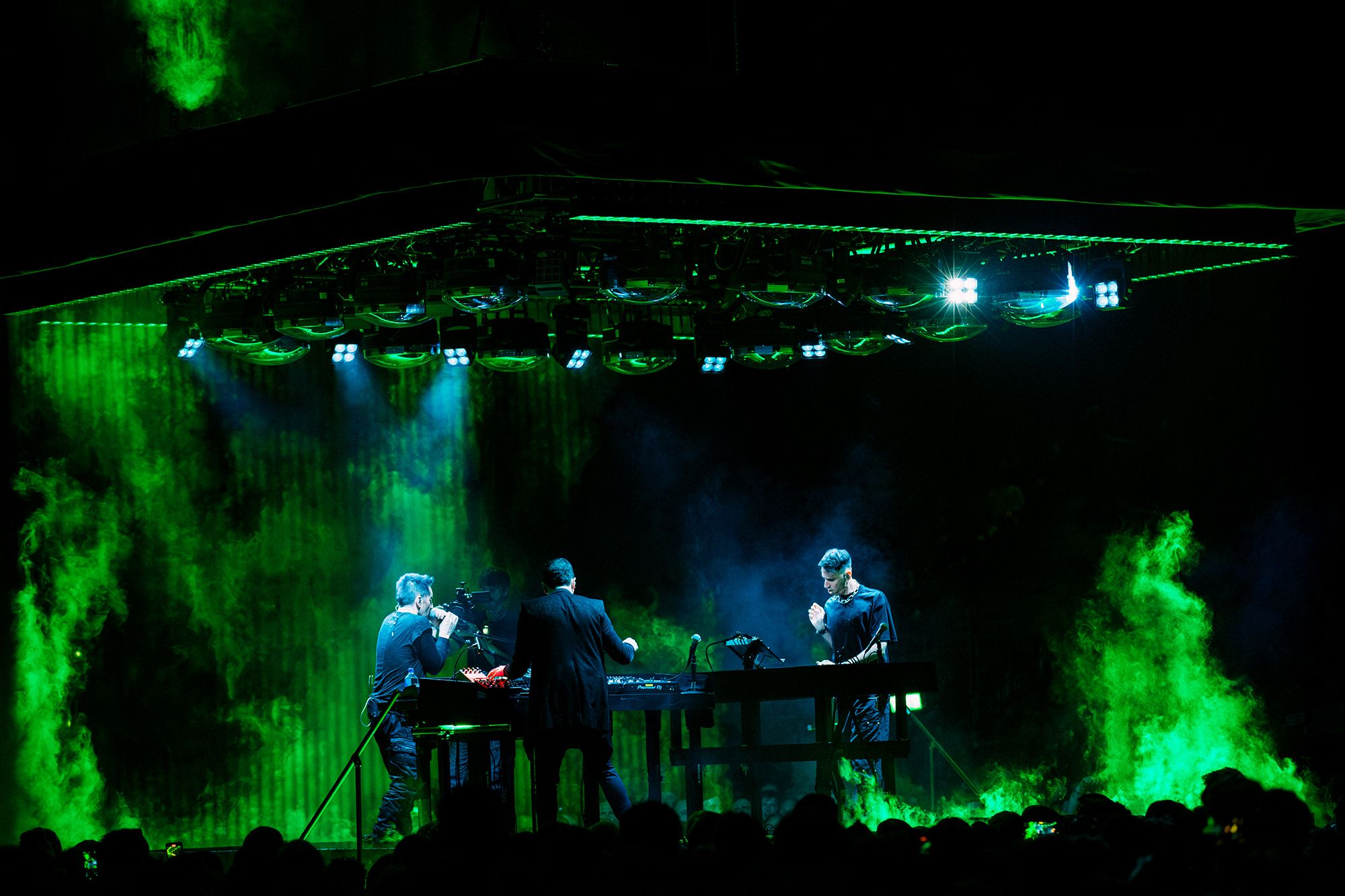
You aren’t necessarily expecting to laugh when you interview a designer about lighting. After all, creating powerful looks on the biggest stages for stars like Nine Inch Nails, Van Halen, Lizzo, Kelly Clarkson, and the like, not to mention the Wicked Movie Premiere, is pretty serious stuff.
Right? Well, yes… but Paul (Arlo) Guthrie’s quick, wry wit makes it pretty easy to break out into at least a smile when he shares what (in reality) are seriously sharp insights into the art and science of his chosen profession.
The Australian-born LD, who now hangs his hat in Minneapolis, where he was a friend and neighbor of Nook Schoenfeld (who wouldn’t want to listen in to some of their back porch chats?), is a highly regarded collaborator throughout this industry. It isn’t just his engaging humor that makes Guthrie a valuable teammate. He is also a good listener and possesses a bounty of knowledge on design subjects ranging from using projections to creating walls of light with motorized battens.
Beginning his lighting career in his native Australia as a teenager, where he worked for Crowded House, Guthrie moved to the Netherlands, followed by London, before relocating to the USA in 1996. A string of high-powered tours and special events followed, and so too did an Emmy Award. Through it all, Guthrie, who owns Toss Film + Design, has continued to sharpen his skills– and sense of humor.
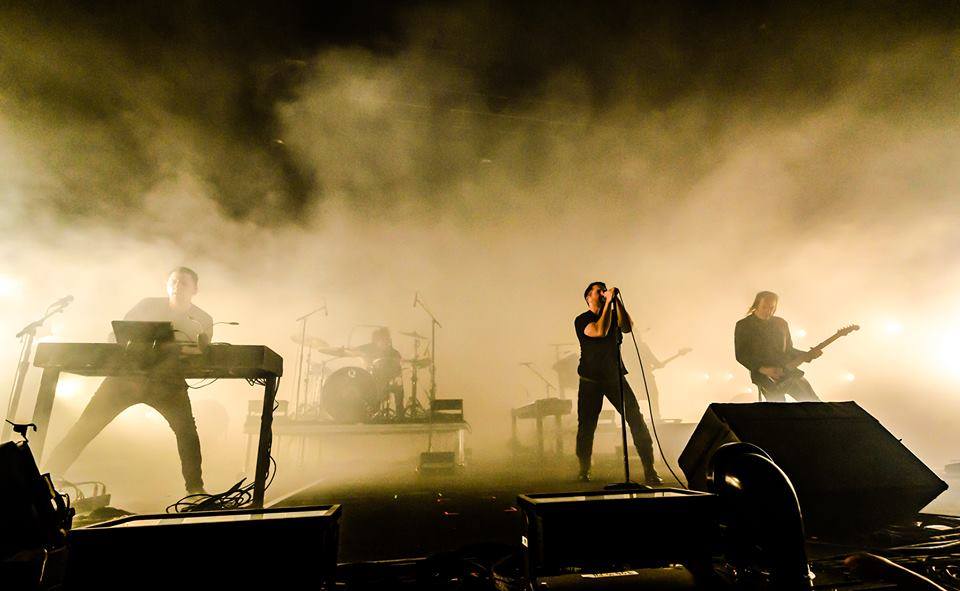
On the Nine Inch Nails Peel It Back tour, you collaborated on a very compelling cubistic design. That design drew on things like motorized battens that weren’t available that long ago. So, does new technology like that give you new ideas, or is it just a matter of new technology allowing you to express visions that were already in your head?
“There is rarely anything inside my head other than hot air and dust. I’ve always loved seeing new fixtures or technology and trying to work out what we can do with it, using that for inspiration rather than the other way around. Seeing new fixtures always gives me new ideas, and I always love seeing what other designers and programmers make them do. On the Peel It Back Tour, the cube aesthetic was floated right from the beginning, so it felt like a good idea to choose motorized batten fixtures that could make a sheet of light to add different planes to the stage. It’s an oddly indulgent and luxurious part of our job where we constantly get given new tools from the manufacturers to incorporate into designs or shows.”
The NIN tour also made great use of video projections, something else that might not have been so readily available not that long ago. How have advances in video projection changed design? What are your thoughts on using LED walls vs. projections? Are there times when one is preferable to another?
“Our biggest challenge in incorporating projection into our design was brightness, and we worked very hard to get it the imagery as bright as it could be, then balanced everything else around it. I loved the texture of the projection in our show. It’s a very organic feeling and cinematic, which I felt matched beautifully with our visual language. Something that we were originally concerned about with — the projected image moving through our scrims and onto other surfaces or other scrims — became something we leaned into and created a myriad of layered, almost holographic effects. Projection also felt more buttery and organic as compared to an LED source, and I didn’t notice any of the banding you can see in gradients on LED walls. Again, they are two different tools and give us differing visual elements to incorporate into designs, and I enjoy using them both.”
On the subject of Nine Inch Nails, you’ve had a very productive creative relationship with them for quite some time. What are the keys to a good designer-client relationship?
“Diffuse tension with sarcasm or woeful ‘Dad Humor’ is my go-to. I always try to be myself, and I’ve learnt over the years to really listen to what any client is saying or what they are saying between the lines, but I think building trust and reliability is the biggest key.”
In addition to NIN, you’ve worked for a wide range of other artists from Lizzo to Kelly Clarkson, and Finneas to Childish Gambino, not to mention The Cult, Melanie Martinez — all the way back to Crowded House and many more. Aside from the music, how does the personality of the artist influence your design?
“I think I’m a designer who tries to bring each artist’s personality to the design. I’m not sure I have much of a personal style. I don’t usually have any ideas going into an initial meeting, which used to be intimidating, but I’ve learnt that this is my process and I work best when I have a discussion with an artist and their team and glean some kind of jumping off point from there. Some artists have little input, and some, like Melanie, come with fully realized plans or decks, and I enjoy both processes. Sometimes design has more of a logistics workload, and sometimes it has more of an artistic workload, and I enjoy both.”
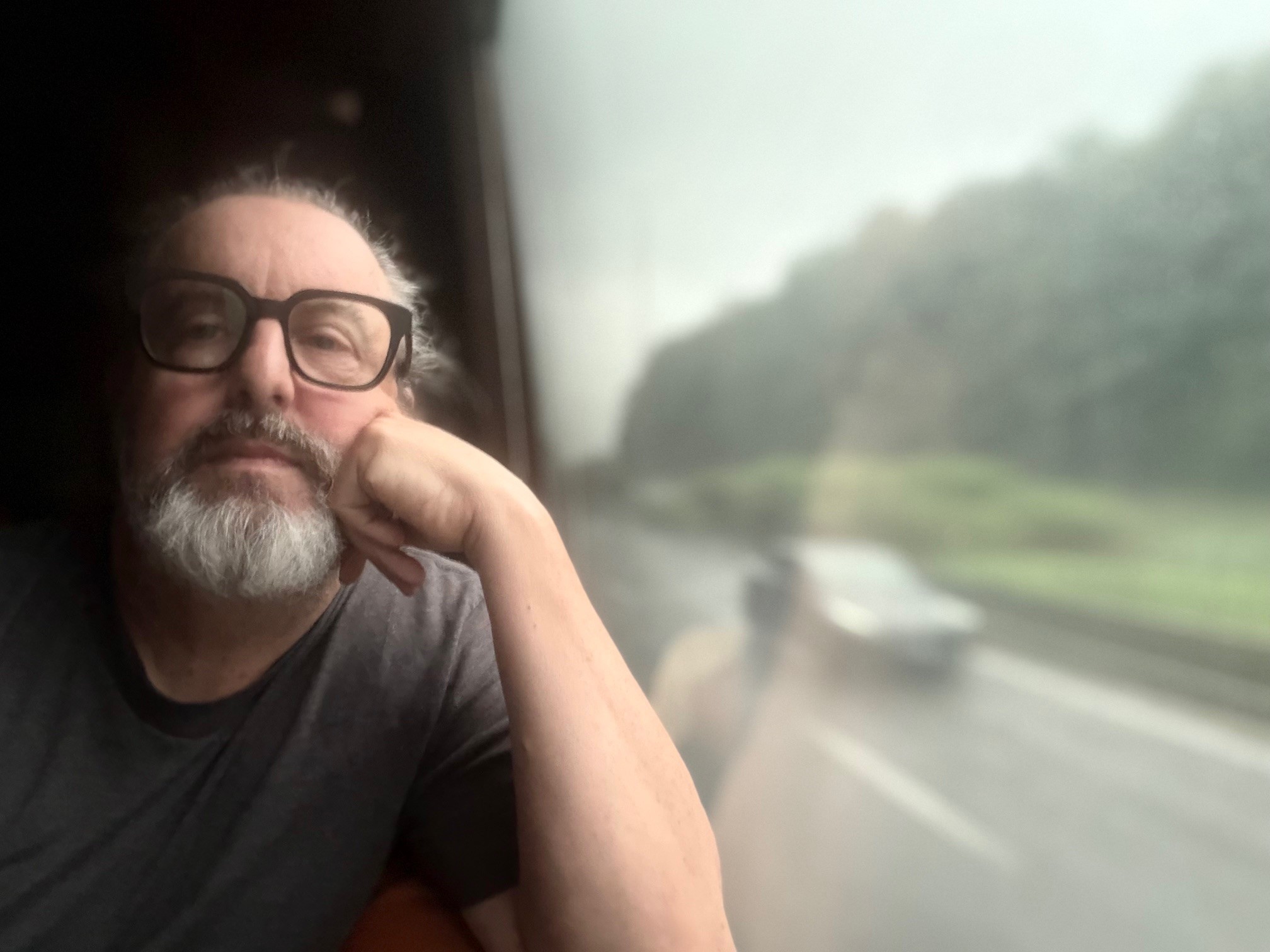
The drummer from one of those bands, Crowded House’s Paul Hester, gave you the nickname Arlo, after the singer Arlo Guthrie, because there were too many Pauls around. How do you like the music of Arlo Guthrie?
“I hadn’t even heard of Arlo Guthrie when Paul gave me that nickname (I’d heard of Woody), but I’ve gone on some recon. I love “Coming Into Los Angeles,” but could never have pulled off that move in real life without giving myself away. Upstaging sent a driver once to pick me up from O’Hare airport to bring me to Sycamore, and I had a hilarious one-hour conversation with him where he was asking me the most obscure and bizarre questions. It wasn’t until later when I was telling John Huddleston about this quirky back and forth when we both worked out the driver thought I was actually Arlo Guthrie, hence his confusion at me telling him I’d grown up in Australia and never played music with my father….”
Back to the NIN tour. You had a B stage there that was 360°. What are the challenges of working with this kind of stage?
“A 360° stage has never been my favorite since it usually makes the audience the backdrop or the only way to explore depth, but I think that we found ways to make it very stark and exposed in Act One, using the entire arena’s focus inward at it. And then in Act Three, we used it to radiate energy out into the arena, flipping what we had done in Act One so it got to play in two opposite ways, which I really enjoyed. I loved how it brought the band right into the audience in a much more intimate presentation.”
One more about the NIN — you collaborated with some high-powered creatives on that tour. As design becomes more elaborate, collaboration becomes more essential. Any advice on being a good collaborator?
“Make sure everyone knows you are the Alpha from minute one. I find that almost every time I entertain any suggestions or direction for something which I would never do, and often at the outset vehemently disagree with it turns out better than what I would have done. Then I take credit for it.”
So, are the days of the “lone wolf” designer over?
“Yeah, I’m too old for that. Also, on almost every project I work on now, either the workload is too much for one person, or the timeline means you need collaborators or at least sympathizers.”
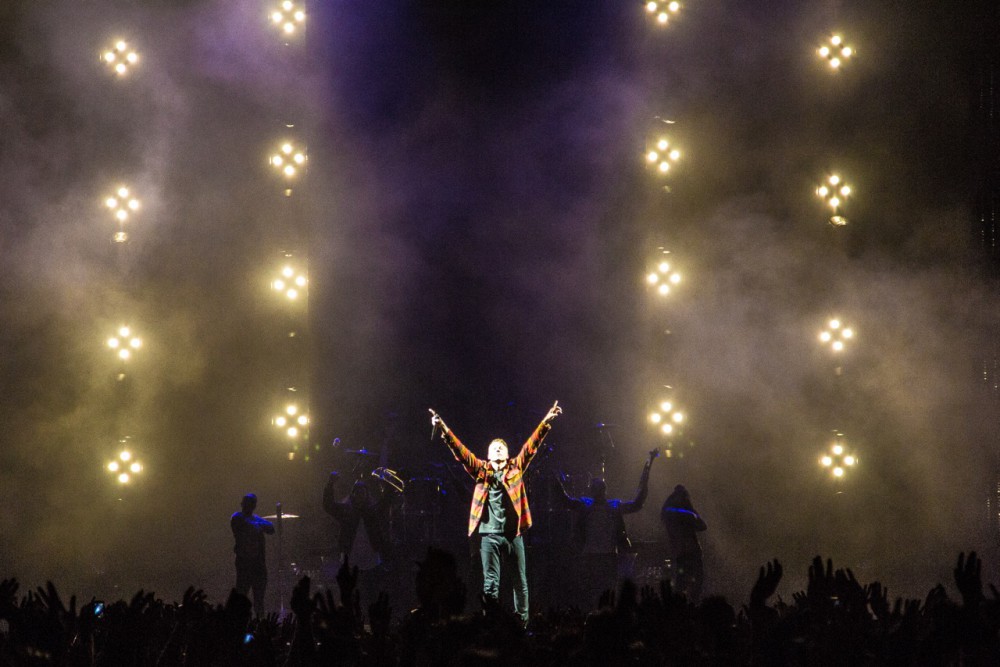
How do you retain old school looks in your design, even with all of the new tech tools you use?
“By yelling at kids to get off my yard. I think I’ve always liked some kind of element of or nod to nostalgia in my shows, even if it’s very subtle; in a way, it pays homage to your heritage. We started the Nine Inch Nails tour in Europe with a very sleek and LED/digital feel to the lighting, and I added par cans for North America because the band thought it felt sterile and they wanted it to feel more dangerous on stage. This also added a very familiar color, quality, and energy to Act Four of the show, which we called the assault set.”
In many of your designs, like Lizzo’s WEHO Pride 2025 and Kelly Clarkson’s Chemistry Residency, you use well-defined geometric shapes to sculpt space on stage. How would you define the role of geometry in design?
“Some of my favorite designs by other designers have been very geometric (Martin Philips with the Daft Punk Pyramid, Vincent Lerisson with Justice). I guess the entire design process is geometry, isn’t it? Kelly’s residency started with an idea of making it look like she was in a recording studio, but for something that is normally a cozy and more intimate space, we had to present it on the Colosseum stage at Caesar’s Palace, which is 120’ wide so I leant into a forced perspective exploded view to try and present those ideas in that space. We wound up with a lot of large geometric pieces to try and convey this idea.”
Without mentioning brand names, is there a type of fixture that you feel is most essential in your work? If you could only use one type of fixture, this is the one?
“I always use some kind of profile with shutters, which is probably the most versatile light you can have. I still love using shutters to isolate or carve out attention.”
Conversely, is there a type of fixture that you feel is most often overused or abused?
“My neighbors both have ugly LED exterior lights that shine into our house and backyard. Hideously overused.”
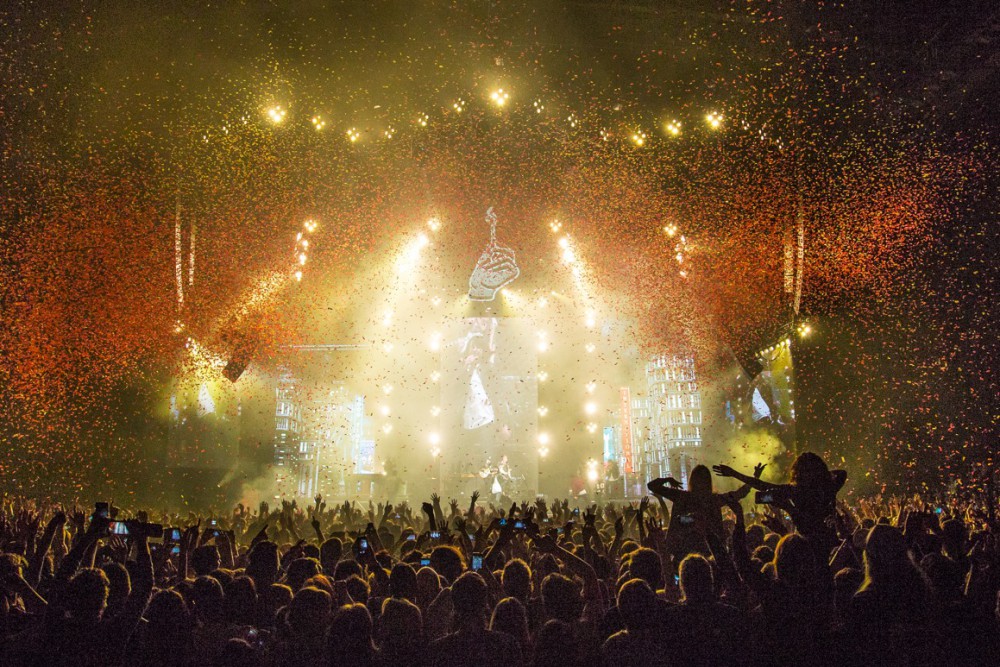
Do you have a favorite color to work with?
“Amber — or orange as I call it.”
You’ve worked with a lot of great artists. Is there one artist from the past who is no longer with us that you wish you could have been around to light a show for?
“I would have loved to do lights for David Bowie or Led Zeppelin. Neither of whom ever needed my help.”
You were neighbors in Minneapolis with our dear friend Nook Schoenfeld. Did you ever discuss lighting design together?
“I was, and what an honor that was. We talked about everything together – guitars, kids, lights, gossip. I remember him telling me he always started a design with a shape; he’d sit down and sketch sets of shapes for trusses, which was something I’d never tried. I almost always start with where I think I need lights and go from there.”
What is the one thing you want people to know about you as a designer?
“I lit the last ever concert by Van Halen at the Hollywood Bowl. And I’m available.”


